Water Heater Leak Cleanup in Leander, TX
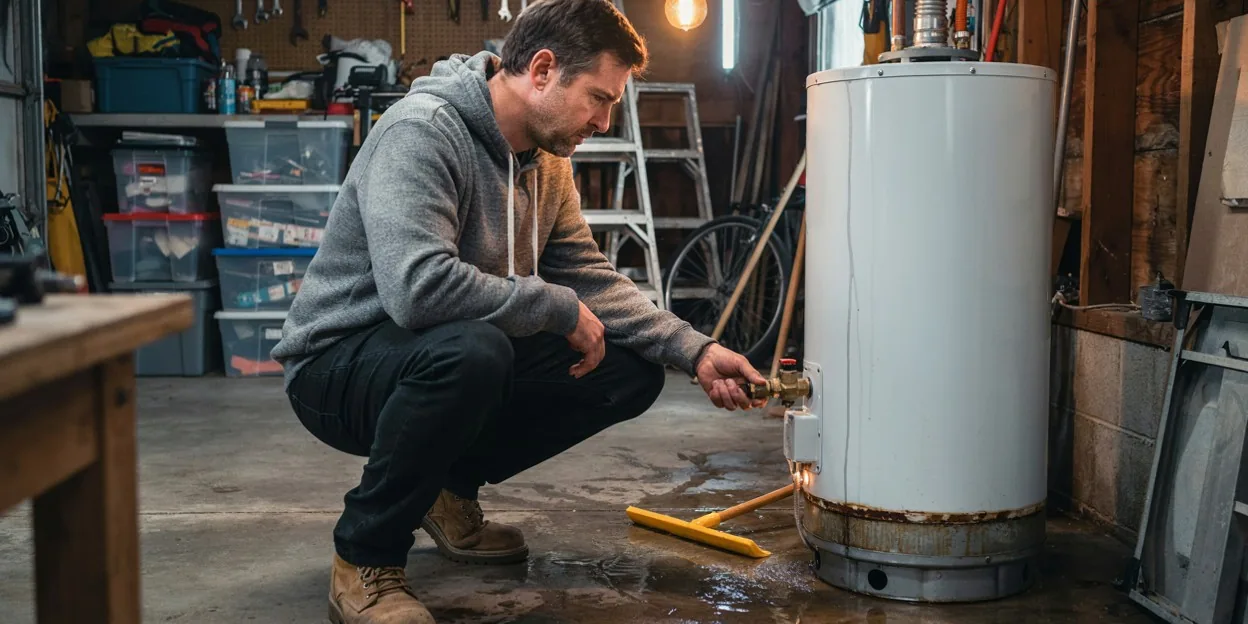
The hot water ran out halfway through a shower, and when you went to look, the hall closet ceiling under the attic was the color of tea and the carpet in front of it was wet. The tank up there is twelve years old. The pan under it filled and overflowed sometime in the night, and fifty gallons have been finding their way down ever since. This site routes your call to an independent local provider who cleans up water heater failures in Leander and across northwest Williamson County.
Following fifty gallons from the attic platform to the slab
An attic tank sits on a plywood platform with a drain pan under it, and that pan is supposed to carry an overflow to a line that exits at the eave. In practice the line clogs, the pan rusts, or the tank fails faster than the drain can carry it. The water then soaks the platform, the blown insulation around it, and the ceiling drywall below, and runs down the nearest wall to the ground floor.
The crew starts in the attic. They shut the cold supply and the gas or breaker, confirm the tank is the source, and look at how far the insulation is wet. Then they meter the ceiling and every wall below, open the ceiling at the low point, and pull the wet insulation so the drywall can dry from above. Downstairs, the wall and floor under the run get the same treatment.
What to do before the crew climbs the ladder
Shut the cold valve on the line into the tank if you can reach it safely, or the house valve at the curb if you cannot. Turn off the gas valve at the tank or the breaker for an electric unit. Put a bucket under the drip and keep everyone out from under the sag. Move what is in the closet below. Photograph the ceiling, the closet, and the attic access. Do not poke the ceiling to drain it. Then call.
Platform, pan, insulation, ceiling: what stays and what goes
The wet insulation comes out. A platform that stayed wet for a day often comes out too, because the plumber needs a dry base for the new tank. Ceiling drywall that sagged is cut; drywall that only stained is dried from above and painted later. Closet shelving and carpet below are judged by the meter. The tank itself is the plumber's job, and the crew coordinates with them so the new unit is not set on a wet platform. Ceiling water damage repair covers the finish work once the readings are back to normal.
Why Leander attics are full of water heaters
From about 2005 through the late 2010s, nearly every production builder in Leander put the water heater and the air handler in the attic to save floor space, and a house in Crystal Falls, Mason Hills, Summerlyn, or Bryson from that stretch almost certainly has one up there. A tank lasts roughly ten to fifteen years in Central Texas water, which is hard enough to leave scale on every fixture, so the first big wave of those attic tanks has been reaching the end of its life in the same years the subdivisions have filled in.
Garage tanks are the other layout, common in the older streets off Bagdad Road and in the newer builds that moved the tank back down. A garage tank that fails floods the garage floor and the wall shared with the house, and the water often reaches the hall or a bedroom closet on the other side. Tankless units on the exterior wall are showing up in the newest houses, and when their supply fitting lets go the water runs down the outside of the house and into the slab edge.
A tank that fails suddenly is a loss most Texas homeowners policies address; a pan that has been overflowing for months is often treated as neglect. This site makes no promise about your policy. Ask the crew to photograph the tank, the pan, and every wet room before anything is moved, and to log readings from the first hour.
Call about the tank that gave out
Say where the heater is, whether the supply is shut, and which rooms below are wet. Mention if the ceiling is sagging. Keep the address and a callback number nearby. Call (737) 317-2602.