Roof Leak Water Damage in Leander, TX
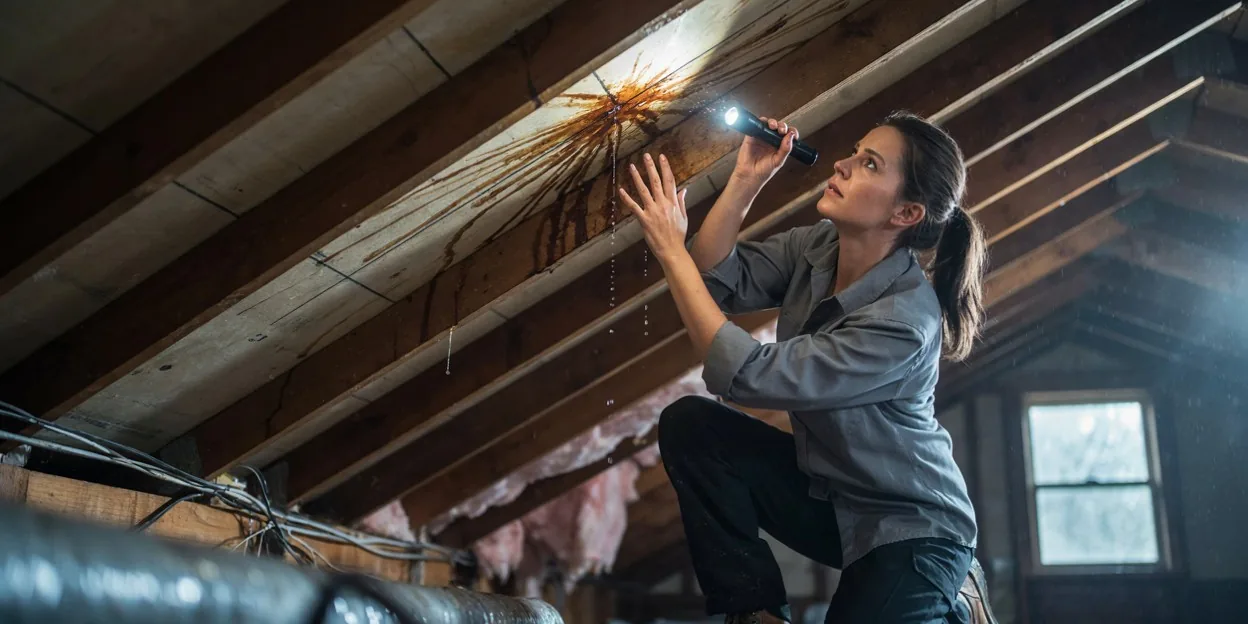
The hail came through on a Thursday evening in April, loud enough to bring everyone to the windows, and the roof looked fine from the driveway. Three weeks and two thunderstorms later there is a wet spot on the bedroom ceiling that dries by Wednesday and comes back by Sunday. This site routes your call to an independent local provider who dries out roof leak damage in Leander and across northwest Williamson County.
Two jobs, two trades: stopping the rain and drying the house
The roofer's part is keeping the next rain out. That is one job. The water that already came in is sitting in the insulation, the ceiling drywall, the top plates of the walls, and sometimes inside the wall cavities down to the slab, and that is the second job. The crew handles the second one. They go into the attic above the stain, find the wet insulation and the water trail on the decking, and meter the ceiling and walls below. Wet insulation comes out. The ceiling is opened at the low point if it has pooled. Equipment goes in and runs until the framing reads dry.
If the roof is still open, the crew can set a tarp or coordinate with the roofer so the drying is not undone by the next storm.
Buckets, tarps, and photographs before the next rain
Put a container under the drip and move anything electronic out from under the stain. If you can get into the attic safely, lay a piece of plastic or a tray under the wet spot on the decking to catch what comes through. Do not walk on the ceiling joists in the dark. Photograph the ceiling, the attic if you reach it, and the roof from the ground. Note which storms make it worse. If shingles are on the lawn, photograph those too. Then call and say the water comes in with rain.
Insulation always, decking sometimes, ceilings where they sagged
Wet blown-in or batt insulation comes out of the attic above the leak, because it holds water against the drywall for weeks and does not dry in place. Roof decking that has been wet through several storms may be soft and is the roofer's call. Ceiling drywall that stained but did not sag is dried from above and repainted. Drywall that sagged is cut. Wall cavities under the leak are metered and dried through small openings behind the baseboard. Ask the crew to mark the wet area on the ceiling before the insulation comes out so you can see the scope.
Hail, hill storms, and the Leander roof
Leander sits on the edge of the Hill Country at about 1,017 feet, in the part of Central Texas where spring storms build over the hills to the west and drop hail on the way east. Every few years a cell puts golf-ball hail across a swath of subdivisions, and the roofs in Crystal Falls, Travisso, Bryson, and Larkspur are mostly the same 25- and 30-year architectural shingles installed within a few years of each other. Hail bruises those shingles without tearing them, and the leaks show up over the next several rains.
Flashing is the other weak point. The two-story houses here have a lot of roof-to-wall joints, chimney chases, and dormers, and the step flashing at those joints is where wind-driven rain from a storm like the ones over the July Fourth weekend of 2025 gets under. A stain that appears only after rain is a roof problem; a stain that appears after showers or when the air conditioner runs is ceiling water damage repair with a different source. If a storm both tore the roof and pushed water up from the street, the ground floor is flash flood cleanup and the attic is this job.
Hail and wind damage are the losses Texas homeowners policies most often address, though many policies now carry a separate and higher wind-and-hail deductible. This site does not read policies and makes no promise about yours. The crew's attic photos and moisture readings, dated to the storm, are what the adjuster works from.
Call when the stain comes back with the rain
Say where the stain is, whether it is dripping now, and which storm you think started it. Mention if shingles are missing or a roofer has already been out. Have your street address and a callback number written down. Call (737) 317-2602.