Leak Detection in Leander, TX
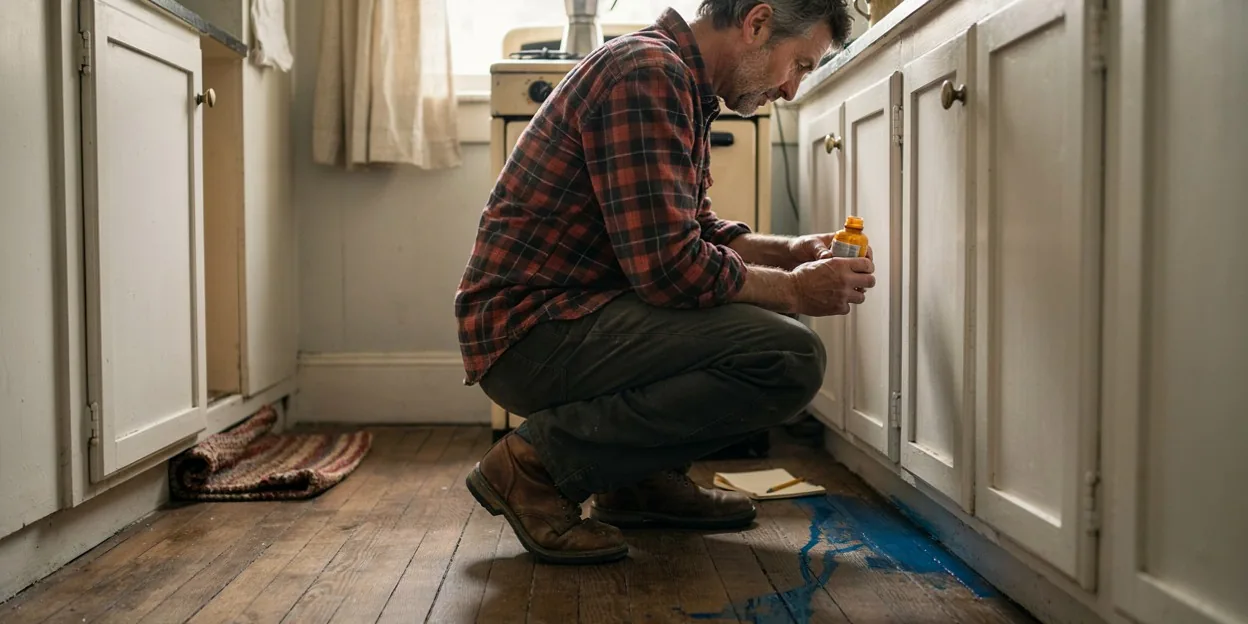
The city bill came in at almost double, the irrigation controller has been off since September, and nothing in the house is dripping. The only clue is a patch of baseboard behind the couch that looks a little puffy and a hallway tile that feels warmer than the ones around it. This site routes your call to an independent local provider who finds hidden leaks in homes across Leander and the Hill Country side of Williamson County.
Splitting a hidden leak into hot, cold, inside, and under
The provider starts at the curb. Every fixture, the ice maker, and the irrigation get shut off, and they watch the meter. If it moves, water is leaving the system somewhere. Then they close the cold valve at the water heater, which splits the problem into hot and cold in one step. A warm floor points to a hot line under the slab. A wet wall with a cold meter still spinning points to a fitting in the wall or at the manifold.
From there the tools narrow it. Acoustic gear picks up the hiss of pressurized water under concrete. A thermal camera shows a warm streak on the floor from a hot-water leak, or a cold streak on a wall where a line is wetting the drywall. Pressure testing on each branch confirms it. The goal is one opening in the right spot rather than three in the wrong ones.
What to check yourself tonight
Turn off every faucet and the irrigation controller, then look at the meter in the curb box. A moving sweep hand with everything off means a leak; note the number and read it again an hour later. Walk the ground floor barefoot and note any warm spots. Look at the bottom foot of every wall for a damp line, bubbling paint, or a baseboard that has pulled away. Open the garage and look at the PEX manifold for drips or mineral crust. Do not start pulling up flooring. Photograph what you find and call.
Only the flooring near the fitting comes up
Leak detection exists so most of the house stays put. Once the line is found, the tile over a slab repair or the drywall in front of a wall fitting gets opened, and the plumber fixes the line. Flooring that has already swelled comes out. Everything else is metered and dried where it stands. Ask the crew to mark the wet boundary on the wall before anything is cut so you can see the scope before it becomes a bill. The drying that follows is structural drying.
Limestone slabs, PEX manifolds, and the Leander leak
East of I-35 the slab leak is a clay problem: the ground swells and shrinks and works on the copper under the floor. Leander sits on limestone at about 1,017 feet, and the slabs here move less. That does not mean no slab leaks, but it shifts the odds. In a Mason Hills or Summerlyn house from the 2010s, the usual hidden leak is a PEX crimp fitting inside a wall, a supply stub behind a toilet, or a connection at the manifold in the garage, and it shows up as a soft wall or a high bill rather than a warm floor.
The older streets tell a different story. Block House Creek and the 1980s and 1990s sections off Bagdad Road have copper under the slab and galvanized fittings that are now past thirty years, and a warm tile in one of those houses usually is the slab. The February 2021 freeze added a third kind: lines that cracked without bursting and have been weeping inside a wall ever since. When one finally lets go, that is burst pipe water damage.
Texas policies treat slab and hidden leaks less consistently than any other water loss. Some pay to open and close the slab but not to fix the pipe, and many exclude slow leaks outright. Ask the crew to photograph and log readings before and after the repair.
Call about the bill, the warm tile, or the soft wall
Have the address and the last two water bills handy, and be ready to say where the floor is warm or the wall is soft. Mention whether the meter moves with everything off. Call (737) 317-2602.